
Start a Quitman County Property Search
Start at the Quitman County Tax Assessor page if a street address is your only clue. Its qPublic link opens the Schneider Beacon property application. The public roll there can tie an address to an owner of record. It also shows a parcel key, mailing address, legal description, values, and exemptions. Field labels and parcel-number patterns vary, so trust the screen rather than a remembered format. Write down every identifier that appears. A parcel number outlasts any rural road spelling. Next, compare the owner on the published tax digest with the latest recorded deed. The assessor's data is a digest, not a live deed register. Need a recorded deed, lien, release, or plat? Use the GSCCCA search system or the Quitman County Clerk of Superior Court. Map lines help you find land. The deed and recorded plat control the legal record. A licensed survey settles any disputed line on the ground.
- Run the current address in qPublic/Beacon and copy the parcel key, owner line, situs address, mailing address, and legal description.
- Search the grantee name and legal clues in GSCCCA, then open the most recent recorded deed or ask the Clerk for it.
- Check the Tax Commissioner record for the bill, payment status, exemptions, and any delinquent tax process.
- Compare the parcel polygon with the deed description and recorded plat, treating GIS lines only as reference geometry.
- Use the courthouse terminal, a written request, Georgia Archives, or FamilySearch when the web route stops short.
Quitman County Records Custodians
Three offices divide the core Quitman County property records work. The Clerk of Superior Court records land transfers and instruments. The Board of Tax Assessors keeps parcel identity and valuation data. The Tax Commissioner sends the tax bill, collects payments, tracks delinquency, and runs tax sales. Value questions and payment questions go to different counters. The assessor and commissioner occupy separate suites at 111 Main Street. The county contact page also lists the main government complex at 25 Old School Road. That street is sometimes called Grove Street in local records.
Quitman County Tax Assessor
111 Main Street, Suite 1
Georgetown, GA 39854
229-334-2159
Quitman County Tax Commissioner
111 Main Street, Suite 2
Georgetown, GA 39854
229-334-9000
Quitman County Deeds Across Two Eras
Modern Quitman County deed research runs through the Clerk and GSCCCA. The statewide Real Estate Index supports several search types. You can search by grantor, grantee, county, book and page, property, or image. Georgia has used statewide indexing since at least January 1, 1999. Older historical data keeps being added. Treat that date as a system milestone, not a county cutoff. A missing result means the web index is incomplete for the job. It does not mean the deed never existed. Full database access is open at Georgia Superior Court clerk offices. That holds even when an online image needs an account. At the counter, request the grantor-grantee index. You can also ask for the deed book, plat docket, lien docket, or General Execution Docket. Record the book, page, instrument type, recording date, both parties, and the full legal description. Those details let a later search move between the web index and older bound or filmed volumes. The GSCCCA search instructions show how the statewide index is organized.
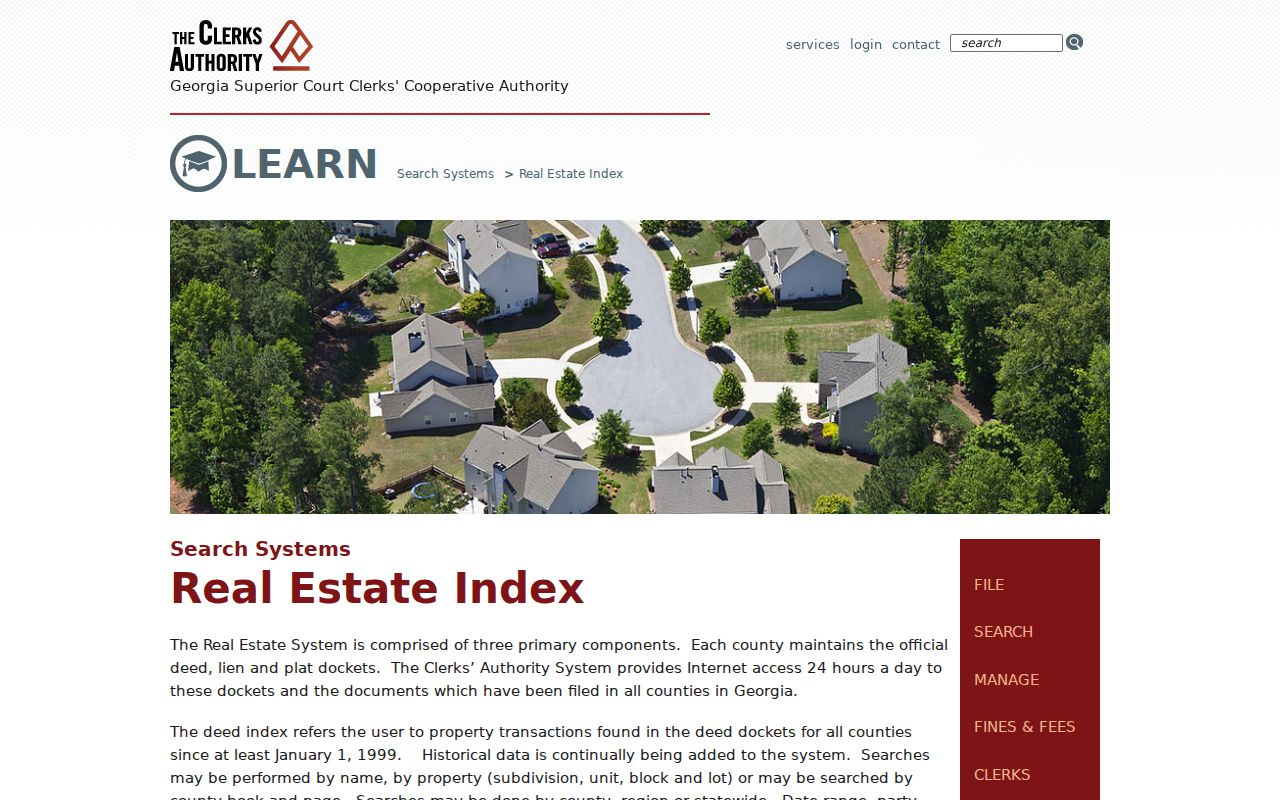
The instructions cover the statewide search modes, not a sample Quitman County deed or a county-specific starting year.
When Quitman County Beacon Blocks Access
The official assessor page links straight to a Schneider Beacon application for Quitman County property records. The application sometimes presents an access challenge instead of the parcel screen. So the exact buttons, value-history fields, and adjacent-parcel tools may not match generic Beacon descriptions. Begin at the county qPublic page. Try the current address and parcel key, and work with what the live screen shows. If the application still fails, call the Tax Assessor at 229-334-2159 or send a focused written request. Include the property address and the known owner. Add the parcel number if you have it. Also name the exact record sought, such as a parcel card or current digest entry. Georgia agencies generally answer an Open Records Act request within three business days. The first 15 minutes of search, retrieval, and redaction are free. Lawful copy costs may apply. An agency need not build a custom compilation it does not already keep. Note: A blocked web form is an access problem, not proof the assessment record is unavailable.
Quitman County Property Record Types
One parcel can surface in many Quitman County property records. Each file answers a different question. A deed documents a conveyance. The assessor roll identifies the tax parcel and the values used in the digest. A tax account tracks the tax bill and collection history. A plat shows an approved survey drawing or subdivision layout. Planning and code files may hold a proposed split or a rezoning. They can also hold permits, inspections, or enforcement matters. Court dockets add foreclosure filings, quiet-title cases, and judgments. They never replace the recorded land instruments.
| Record Type | What It Documents | Kept By | Access |
|---|---|---|---|
| Deeds and security deeds | Transfers, grantees, legal descriptions, secured interests | Superior Court Clerk | GSCCCA, terminal, counter |
| Liens and releases | Recorded claims, cancellations, and execution references | Superior Court Clerk | Separate dockets and copies |
| Assessment and tax | Parcel identity, values, exemptions, bills, payment status | Assessor and Tax Commissioner | qPublic, tax office, request |
| Plats and parcels | Lots, subdivisions, reference geometry, land-lot context | Clerk and assessor GIS | Plat docket, Beacon, clearinghouse |
| Permits and zoning | Applications, inspection activity, rezoning, subdivision review | Unified government | Office request and meeting records |
Start with the record that answers your question. Proof of ownership lives in the newest deed. A tax amount comes from the Tax Commissioner, while a value or an exemption begins with the assessor. Lot lines demand the recorded plat. A survey settles anything the plat leaves vague, and a PeachCourt party search can surface a lawsuit touching the parcel. Connect any case outcome back to a recorded instrument before treating it as part of the Quitman County property records.
Quitman County Values and Tax Bills
Georgia assesses most taxable property at 40 percent of fair market value under O.C.G.A. §48-5-7. The assessor sets fair market and assessed values and applies exemptions for the digest. The Tax Commissioner then combines the taxable amount with millage to issue and collect the bill. The jobs are linked. They are not the same record. A parcel card is not a tax bill, and neither figure is a private appraisal or a promised sale price.
Quitman County's local material sets November 15 as the normal tax due date. Homestead filing runs January 1 through April 1. Appeals are due within 45 days of the notice. Confirm the current notice and bill before acting. Delinquent tax can become a FiFa, meaning a tax execution. The local FAQ reports that the execution stays public on the Superior Court General Execution Docket for seven years after the county's delinquency process. Those deadlines shape every Quitman County property tax decision.
Quitman County Parcels Beyond the Polygon
Beacon merges assessment functions with mapping. The Georgia GIS Clearinghouse offers county parcel, CAMA, address-point, road, land-lot, and militia-district data products. Each layer does different work. Parcel and CAMA files tie geometry to a tax account, and roads and address points help locate access. Land lots and districts decode older Georgia descriptions. Aerial imagery can be dated or shifted. Test the live Quitman layer names and any buffer, measure, select-by-location, or adjacent-feature tool yourself. Never treat the tax polygon as a surveyed boundary. Fences, monuments, occupation lines, easements, and bearings may not match the display. The Clerk's recorded plat and deed description carry legal weight, and a surveyor settles a disputed line.
- Parcel
- A tax and mapping unit identified by the assessor.
- Plat
- A recorded drawing showing lots, bearings, monuments, roads, or easements.
- Situs address
- The physical location label, which may differ from the owner's mailing address.
- Metes and bounds
- A legal description using bearings, distances, monuments, and calls.
Quitman County Planning Leaves a Trail
Planning files explain a changed parcel. The unified government's Planning and Zoning Commission reviews rezoning, variances, and subdivisions. Code Enforcement handles permits and inspections but posts no online permit-search database. Ask those offices for applications, approvals, inspection records, and commission materials. Use an address, applicant, parcel, subdivision name, or date range. Tanglewood Trail offers a live example. March 11, 2025 commission records describe rezoning a 14-acre A-1 tract to R-1. The division created 12 parcels with onsite stick-built homes of at least 1,200 square feet. June 10 records describe preliminary-plat approval after a River Valley Regional Commission presentation. That sequence is a planning trail. It does not prove every lot was recorded or built. Confirm the final plat in the Clerk's Plat Docket. Then check the resulting parcels in current assessor data. Approval and recording are separate steps in Quitman County. The Planning and Zoning Commission page identifies the local review body and its access route.
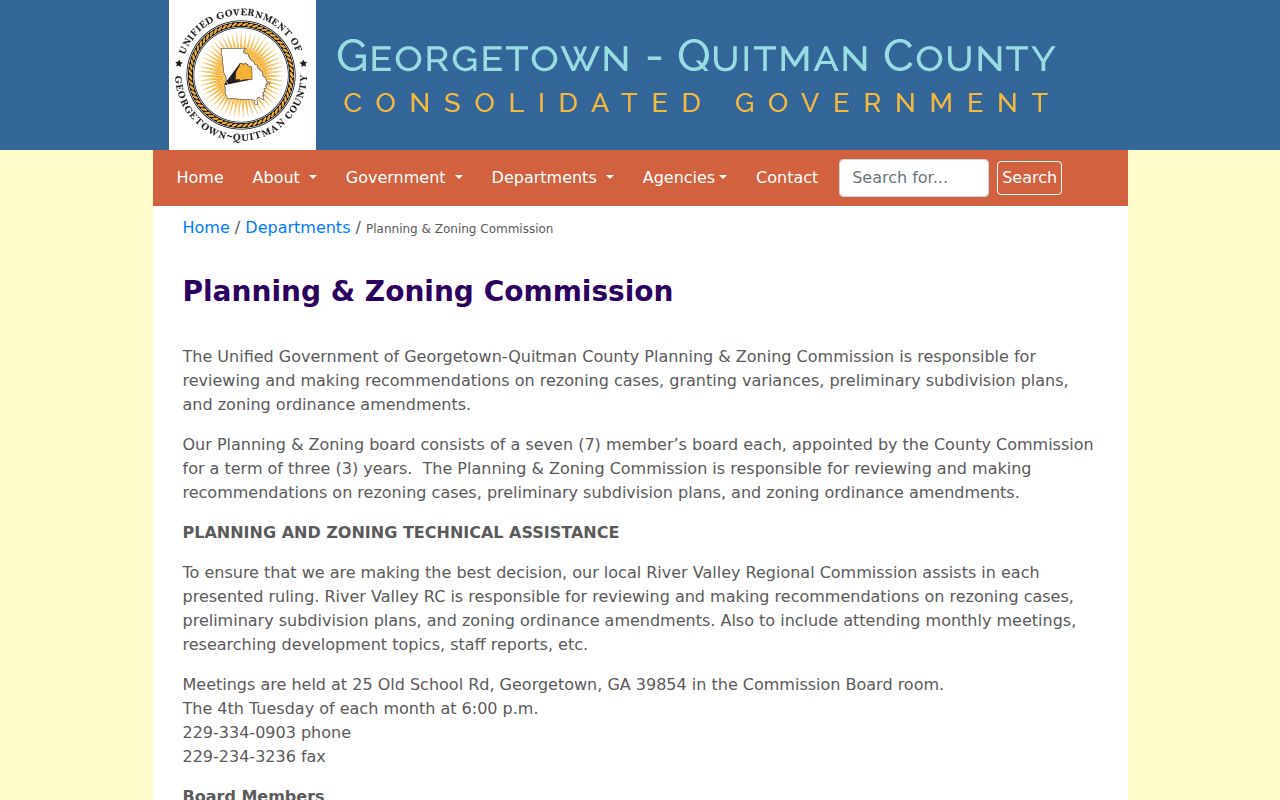
The official planning page connects meeting actions and plats.
Historic Quitman County Land Books
The Georgia Archives bridges pre-digital Quitman County property records. Its catalog lists Mortgage and Deed Books 3 through 16 in runs from 1879 to 1924. Ordinary Minutes cover 1864 through 1902. Later probate and will material is cataloged too. Mortgage and Deed Book 15 has a record-level finding aid for pages 386 and 387 and is marked indexed. The metadata guides a request, but read the image itself for parties, consideration, and the legal description.
Older research works backward from a known modern deed. Copy its grantor, book and page, land lot or district, and description. Search that grantor as the grantee on the prior transfer. Repeat until the online trail ends. Then carry the same names and legal clues into the Archives or the FamilySearch catalog. Probate minutes explain estate transfers outside a simple chain. The Georgia Archives Virtual Vault shows the tax, deed, and probate collection route.
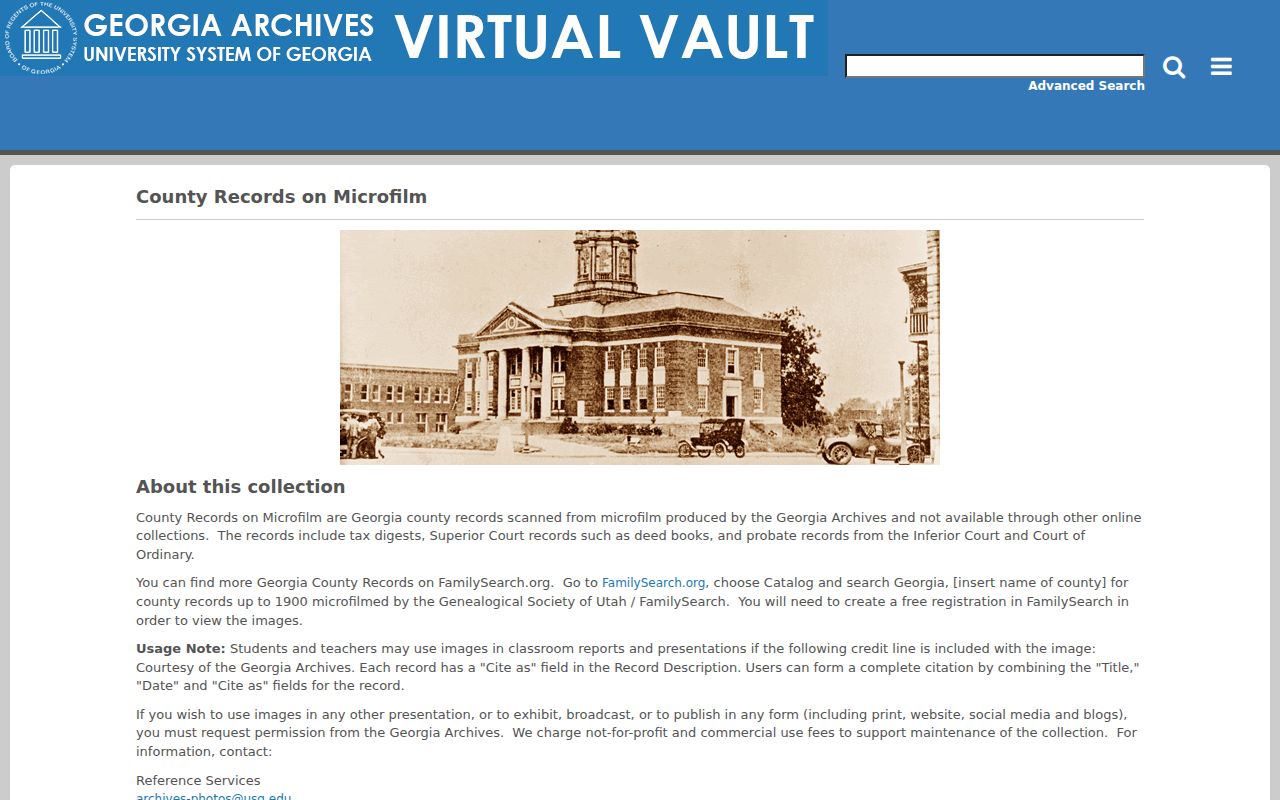
The collection view covers filmed volumes, not parcel cards.
Quitman County Address Clues
Addresses shift in Quitman County more than newcomers expect. Grove Street also answers to Old School Road. Middle Street is US Highway 82 under another name. A Quitman County deed, tax notice, permit, or news item may use either label, so try each alias before deciding a record does not exist. Postal history matters here too. USPS moved Georgetown deliveries from ZIP 31754 to 39854 on July 1, 2002, a change covering 1,357 deliveries. Run pre-2002 searches under the old ZIP. Use 39854 for everything after the switch.
A Georgetown mailing address still proves nothing about land inside the historic city footprint. Georgetown and Quitman County operate as a consolidated government, and the city is the county's only incorporated place. Record the land lot, district, subdivision, lot, and parcel key beside every street name. Those details reconnect an old deed when a modern street search fails.
Note: USPS geography routes mail, so it defines no parcel boundary, ownership, or historic city line.
Quitman County Court Record Cross-Checks
Property fights often land in court before or after a deed reaches the deed books. Quitman Superior Court sits in the Pataula Judicial Circuit. eAccess routes its electronic records to PeachCourt. A free account opens the system. Older files may sit only at the courthouse. Search exact party name variants and read the docket, filing, and disposition closely. Then ask whether the case produced a deed, lien, order, or release recorded with the Clerk.
Federal matters go elsewhere. PACER and CM/ECF carry the electronic files of the Middle District of Georgia's Columbus Division. Files before 2004 may require an older-file order. Copies run 50 cents per page. Bankruptcy and federal litigation can supply real context. Still, no party search at either level substitutes for a full title search of Quitman County property records.
Quitman County Open Records Requests
Georgia's Open Records Act, O.C.G.A. §§50-18-70 through 50-18-77, covers most nonexempt agency records. Plenty never reaches a website. A written request is the fix. When a parcel card, permit file, commission attachment, or existing export is missing, put the request in writing. Aim it at the office that keeps the record. Name an existing document. Give a narrow date range and every search key you know. Ask for electronic production when that format already exists.
Agencies generally respond within three business days by producing the record, quoting a timetable and cost, or citing the specific exemption for anything withheld. Protected data can be redacted. The first 15 minutes of staff search, retrieval, and redaction time are free; copy charges and direct costs can follow, and the Act never requires an office to create a new list, analysis, or custom map.
Quitman County Deed Fraud Checks
GSCCCA offers a statewide FANS notification service. Quitman County advertises no separate signup or local launch. Never assume a county-branded alert exists. Owners can still watch the current deed index, keep book and page references, and ask the Clerk about notification options. Confirm any recent-recording notice through official contact details. Beware numbers and QR codes on unsolicited mailers.
Deed-copy solicitations often quote public addresses and recording dates, which makes them look official. Ask what instrument is being sold. Compare the stated fee with the Clerk's actual copy terms. Tax threats deserve a call to the Tax Commissioner at 229-334-9000. Keep the envelope, sender, payment demand, and instrument reference. Report suspected fraud to the Clerk, the local Sheriff, the Georgia Attorney General, or the Federal Trade Commission.
Limits on Quitman County Property Records
Quitman County property records answer many questions. They name an assessed owner, recorded grantee, parcel, legal description, value, and tax status. Plats and instruments of record appear as well. Occupancy, though, is not one of them. The records cannot prove who lives in a home, establish a surveyed line, guarantee every interest was found, or forecast a sale price. Owner and mailing data can lag a closing.
Safe at Home and VoteSafe shield qualifying Georgia addresses. Never try to reverse a protected location through related files. Conflicting sources call for the record's keeper. The assessor corrects roll and value issues and provides the appeal route, while the Clerk handles instruments, though a fix may require a new deed, affidavit, order, or legal advice. Tax bills belong to the Tax Commissioner, boundaries to a licensed surveyor, and title to a qualified title professional.
Lawful use. Use Quitman County property records for title research, purchase diligence, boundaries, estates, and civic review. Georgia stalking and aggravated-stalking laws prohibit conduct that harasses or intimidates another person.